















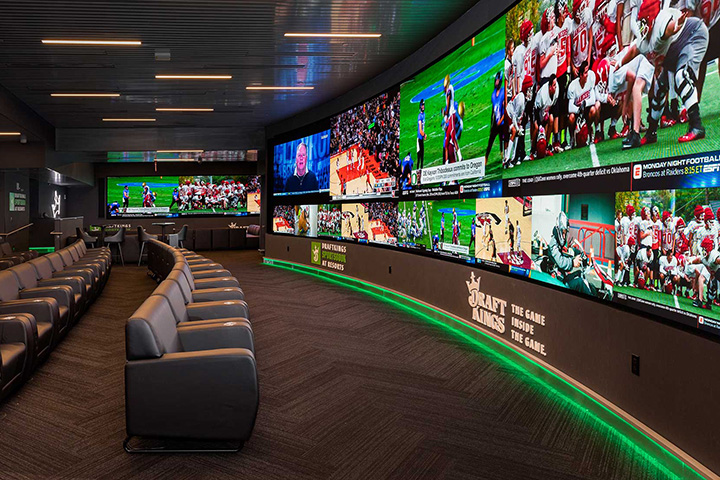
Recently, gambling has been taking the sports world by storm. Mobile gambling has exploded, leading to more normalization and accessibility to gambling.
On May 14, 2018, the federal government lifted the nationwide ban on sports gambling. This meant that sports gambling was not only limited to the state of Nevada. By the time it was August of 2018, DraftKings had become the first sportsbook to open outside of Nevada and launched its online and mobile sportsbook out of New Jersey. As of February 2023, there were 4,792 global casinos and online gambling businesses worldwide.
Gambling in itself is controversial because it is highly addicting. Many people feel a “rush” when they win, which is their brain releasing dopamine. The anticipation of winning and the uncertainty leads to an addictive reward system similar to substance abuse. Although there are help hotlines, many people try to face their addiction by themselves, which leads to other harm. Many people keep gambling to win back the money that they lost and end up in a deeper hole than before, worsening their situation.
The popularization of mobile sports betting has not only affected athletes, as mobile sports bettors are significantly more likely to develop compulsive behaviors than traditional gamblers, and mobile betting is available 24/7, so it is a lot easier to place bets, and these bets are available all the time.
Young adults and teens are especially susceptible to gambling addiction because of their developing brains. Since the legalization of mobile apps, betting has become more easily accessible to teens and young adults because of the difference in age verification. Real-life casinos use technology to verify an id, but online gambling cannot compare a real person to their ID.
Online gambling is very accessible to young adults because of the age verification system. Verifying an online account can be as simple as taking a picture of someone’s parent’s or sibling’s ID and uploading it.
Although it leads to many problems within sports, gambling is not inherently bad. Sports gambling is actually very common, especially due to its mobile availability. One of the main reasons that gambling is so popular is that it turns a regular game into a more engaging version that requires bettors to pay more serious attention. Every game has a favorite, but for some games, the favored team is supposed to win by a landslide, so just watching the game could get boring for fans, especially in a one-sided game.
Mobile sports betting also introduced prop bets, bets that are outside of just a win or a loss. The reason as to why prop bets are so popular is that they have significantly lower odds. Prop bets are a larger risk but pay out more money. Prop bets can also be combined with other prop bets or even game lines to create what’s called a parlay, a string of bets that are connected. Parlays and prop bets offer a higher risk for a higher reward, which gives more dopamine to the brain and further enables the addiction.
Today, if you turn on a sporting event, you are almost guaranteed to see some type of gambling promotion, whether it’s a full 30-second ad, a small sidebar, or on the sideline or field. Promoting gambling in this fashion, and integrating it into sports to this extent doesn’t just influence fans to start gambling; it also influences the athletes to gamble as well. Now, it shouldn’t be a problem for a player to stop at a casino when in Vegas, but gambling on the sport that they are playing is highly illegal.
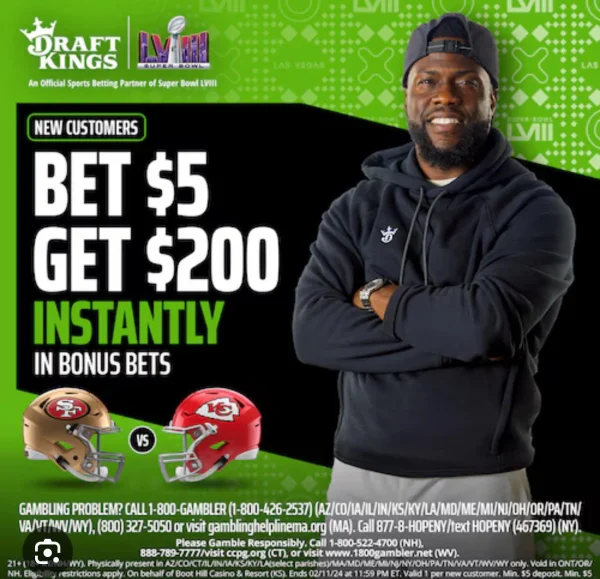
Mobile sports betting has also been very popular because of the commonly seen ‘deals’ in advertisements. Many betting platforms offer a free bet worth an amount of money on top of the first bet you make or a certain amount of money to gamble with upon sign-up (pictured left). This marketing strategy works because the company is assuming that you will lose the bet, and the money will go back to the company.
An example of this marketing strategy is the UFC (Ultimate Fighting Championship). The UFC is the world’s largest mixed martial arts (MMA) promotion. The UFC holds many of its fights in Las Vegas, which is where the UFC headquarters is. The UFC has many connections to gambling due to its unpredictability and its excitement.
Recently, a fighter named Isaac Dulgarian (pictured being choked on the left) has been under controversy for purposefully losing his fight and taking a side payment. A few hours before his fight, the odds significantly changed, meaning someone put a large amount of money on the underdog. Dulgarian, who was the favorite, had now become the underdog.
During the fight, Dulgarian, who is a Brazilian jiu-jitsu black belt (high level of wrestling and grappling on the ground), almost looked as if he let his opponent choke him out and win. This fight raised many eyebrows and Dana White, president of the UFC issued a statement saying that Dulgarian was removed from the promotion, and the situation was being investigated by the FBI and other anti-fraud organizations. Although highly illegal, this situation isn’t super rare across sports.
Recently, many athletes across all sports have been suspended or punished for placing bets in their own sports or games. In 2021, the Atlanta Falcons wide receiver, Calvin Ridley, received a 1-year suspension for placing bets on NFL games. In 2022, New York Jets’ coach Miles Austin was also handed a 1 year suspension for using a mobile gambling app while at a team facility. In 2023, 6 players were indefinitely suspended by the NFL (4 of which were reinstated) for breaking the gambling policy. 3 others were handed 6-game suspensions.
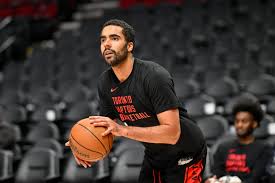
In 2024, San Diego Padres infielder Tucupita Marcano was given a lifetime ban for betting on games that included his own team while he was on the roster. Four other players were also given 1-year suspensions. Jontay Porter (pictured right), Toronto Raptors small forward, was given a lifetime ban for betting on himself and purposely playing badly to win the bets. He was also arrested and likely will serve 41-51 months in prison for wire fraud.
Gambling laws apply to everyone. Japanese baseball superstar Shohei Ohtani was also recently involved in a huge gambling scandal with the MLB. Allegedly, Ohtani’s interpreter, Ippei Mizuhara, had access to Ohtani’s bank accounts and stole nearly $17 million to pay off illegal gambling debts. The scandal started when news broke that Mizuhara acquired millions of dollars in gambling debt.
Initially, Mizuhara told ESPN that Ohtani had agreed to pay his debts, yet Ohtani’s legal team later issued a statement that the money was stolen from him, and he had not been aware of the debts. Authorities later concluded that Mizuhara had stolen over $16 million from Ohtani’s account without permission. Mizuhara pleaded guilty to bank fraud and tax fraud and was sentenced to 4 years and 9 months in prison. Ohtani was cleared of any wrongdoing, leading some fans skeptical.
Along with other sports leagues, the MLB continues to face struggles with gambling. Another MLB all-star pitcher, Emmanuel Clase (pictured left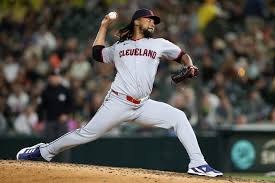 ) alongside one of his teammates, Luis Ortiz, is currently being investigated for rigging bets on pitches. Clase recently bailed out of jail on a $600,000 bond and is on paid leave with the Cleveland Guardians as he awaits trial. The indictment claims that Clase and Ortiz participated in a scheme to rig bets by giving bettors information on his pitches.
The reason why gambling affects a lot of athletes is because they are in the “at-risk” population for gambling. Studies show that the percentage of mostly young male student athletes that bet on sports has increased, which leads to concerns that if they seek help for a gambling disorder, they may face suspension or ineligibility, which creates a barring to treatment. Athletes placing bets is a growing problem because of the nature of these companies. Sports books make money off of losses, so for them, getting as many clients as possible is their goal. These athletes see advertisements for gambling everywhere, which is another part of this problem.
All in all, although not inherently bad, mobile sports betting has brought many problems with it and continues to set careers off course.

![According to Ms. King, the weirdest thing Irv does that makes him unique, is acting like a cat! For example, when Irv is mad at Ms. King, he will knock things over to get a reaction out of her, just like a cat would. I find it cute, it shows that Irv has a big personality. To add on to his sweet, bratty personality, Ms. King said that if Irv gained the ability to speak, “before he even speaks, he would give [her] a side eye. And then he’d say ‘give me a snack and take me for a walk.’” If you’re interested in seeing more of Irv, follow his instagram!: @irvthedog](https://pscscholar.com/wp-content/uploads/2026/04/KingIrving-980x1200.jpeg)