


















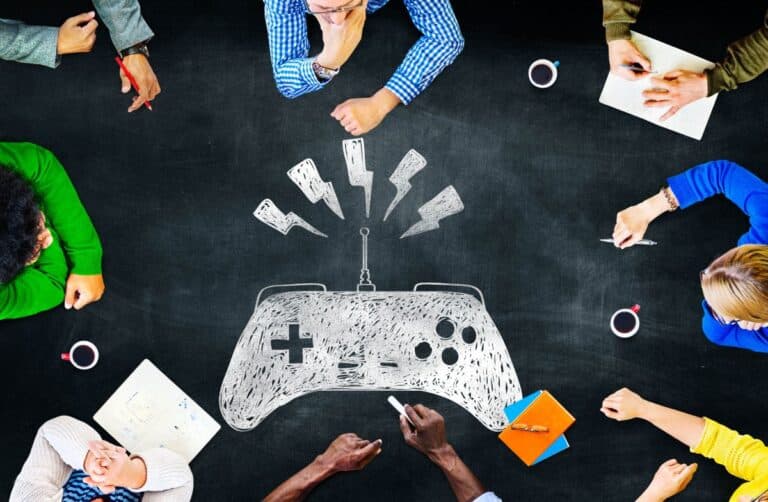
Most people in society view video games as a bad thing that isn’t good for you and can negatively affect your mental health. Everyone thinks this due to some people that do play video games that are addicted to them, that they are still living in their moms basement at the age of 30, or because some people that commit violent or life threatening acts do play video games. However, people never think about the good side of video games and how they can help people learn.
Video games can help people in a lot of different ways. From lowering stress to playing something nice and peaceful, video games can help people pass the time and relax for a bit. In the article “Video Games to Relieve Stress,” Humanitas University explains how video games can develop more emotional awareness and coping skills. When playing video games people also can find useful strategies to handle their negative emotions.
Most important of all, video games can help people learn new things and sometimes faster than people who don’t play video games. Learning new things can be very hard for some people to do, it might take days to get something and then weeks to memorize it. Video games can help with both. There are multiple articles that show this, however we will be going over two for right now.
My first point is that video games can help with learning speed. The article that shows this is “Playing action video games can boost learning” by Monique Patenaude. Monique Patenaude’s article talks about how when they did an experiment with two different types of gamers, people that played action video games and people that played non action video games. The researchers found out that action video game players were able to build and fine tune templates faster and quicker then the non action video game players. When they started to begin some particle learning tasks they were basically identical to non-action gamers. This shows how depending on the video games, especially action games, you can learn and get things done much faster than usual, depending on the type of games you play.
The second and last point I wanted to make is that video games can help with cognitive skills. According to the National Institute of Health, almost 2,000 kids that have been reported to play video games for three hours per day or more, performed better on cognitive skills tests involving impulse control and better memory compared to children who had never played video games. This was confirmed by NIDA and other entities of the National Institutes of Health. Those kids also had faster cognitive skills then non video game players as well: “The researchers found that the children who reported playing video games for three or more hours per day were faster and more accurate on both cognitive tasks than those who never played. They also observed that the differences in cognitive function observed between the two groups was accompanied by differences in brain activity.”
It is true that video games can cause addiction and can affect your mental state if played too much. However, that doesn’t mean they are bad for you. Video games, as shown, can help you learn and grow a lot. Some video games might also inspire you due to their story and even help you at the lowest moments of your life. Everyone should give video games a chance not just because they are fun but also because they can help you learn and grow as a person.



![According to Ms. King, the weirdest thing Irv does that makes him unique, is acting like a cat! For example, when Irv is mad at Ms. King, he will knock things over to get a reaction out of her, just like a cat would. I find it cute, it shows that Irv has a big personality. To add on to his sweet, bratty personality, Ms. King said that if Irv gained the ability to speak, “before he even speaks, he would give [her] a side eye. And then he’d say ‘give me a snack and take me for a walk.’” If you’re interested in seeing more of Irv, follow his instagram!: @irvthedog](https://pscscholar.com/wp-content/uploads/2026/04/KingIrving-980x1200.jpeg)